
Rhythmic Instruments : Exploring Definition, Functions, and Examples
Rhythmic Instruments – In this exploration, we delve into the world of musical instruments that act as the fiery heartbeat behind the melodies—the rhythmic instruments. From drums that make us sway at rock concerts to sophisticated electronic instruments, these rhythmic instruments not only produce sound but also evoke the emotional vibrations of music. What exactly are rhythmic instruments? Let’s unravel the explanation and examples below!
What is Rhythmic Instruments
Before delving further, let’s first understand what rhythmic instruments are. Rhythmic instruments are musical instruments specifically designed to produce and express rhythm in a musical composition.
These instruments come in various forms, from drum sets for rock genres to unique-sounding cajóns for Latin music. Shakers also add a cool vibe. Rhythmic instruments truly serve as the secret key behind the beats that make us groove!
The Functions of Rhythmic Instruments
Here are some primary functions of rhythmic instruments:
- Providing a rhythmic foundation in a musical composition, helping to shape rhythmic patterns that serve as the basic framework for other musicians to follow.
- Determining beat patterns that aid in defining the speed and rhythmic characteristics of the music.
- Adding dynamic elements and energy to enrich the listening experience.
- Serving to accentuate or introduce variations in specific sections of the music.
- Some rhythmic instruments, such as small percussion or dampened sound-producing instruments, can be used to add nuances and colors to the music.
Rhythmic Instrument Types and Examples
Let’s explore various types and examples of rhythmic instruments:
1. Drum Set
An ensemble of percussion instruments that includes components like bass drums, snare drums, tom-toms, hi-hats, and cymbals. It often forms the core of musical ensembles, especially in rock, pop, jazz, and other modern genres.
2. Traditional Percussion
Instruments rooted in the cultural and traditional practices of specific communities. Examples include the djembe in West Africa, commonly used in various ceremonies and traditional performances.

3. Metal Percussion
Instruments made of metal, produce sound through striking or vibrating. Examples include the triangle and cowbell, each contributing a distinct metallic resonance.
4. Wooden Percussion
Wooden percussion instruments, such as the cajón, create warm and natural-sounding tones. The cajón, originating from Peru, has gained popularity in genres like flamenco, Latin music, and acoustic music.
5. Small Percussion
Compact instruments are used to add accents, nuances, or variations in musical compositions. Examples include shakers and maracas, contributing to diverse musical genres.
6. Cymbals and Gong
Percussion instruments with dramatic sounds. Cymbals, like hi-hats and crash cymbals, add rhythmic variety, while gongs create deep and dramatic tones, commonly used in orchestras and ethnic music.
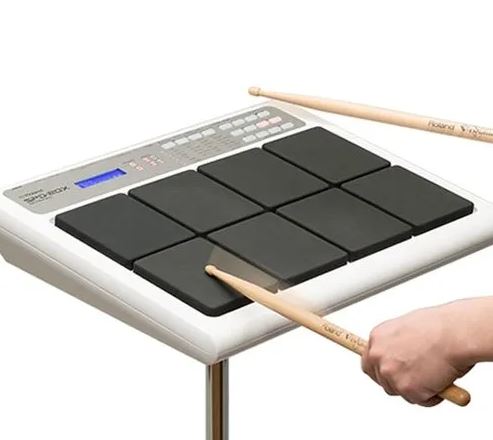
7. Electronic Rhythmic Instruments
Percussion instruments utilize electronic technology to produce and modify sounds digitally. Examples include drum machines and samplers, enabling musicians to create diverse and innovative percussion sounds.
You Might Also Like:
New Guitarist for Smashing Pumpkinsfor Their 2024 Tour
Playing Rhythmic Instruments
To play rhythmic instruments, understanding basic rhythms is essential—from fundamental beats to accents and rhythmic patterns. The combination of hands, feet, or other body parts depends on the instrument. Additionally, knowledge of proper techniques and movements is crucial for producing desired sounds. Continuous practice ensures precision and speed. Expressing oneself while playing rhythmic instruments is vital to bringing songs to life and adding vibrancy to the music. Playing rhythmic instruments requires a blend of rhythm, skill, and expression to truly shine!
Explore more about the world of music at Musiccorners.com for the most comprehensive updates.


