
Flute Instrument: A Fresh Look at Its Origins, Varieties, and Playing Techniques
Imagine strolling in a park at dusk—gentle breeze, orange sky—and suddenly you hear a soft, soothing tune drifting through the air, smooth as a whisper. That calming melody? It’s the flute instrument at work. You might think it sounds peaceful, but this humble woodwind has a powerful way of lifting moods and capturing attention.
The flute isn’t just for grand orchestras; it’s found its way into jazz, pop, and even traditional music across cultures. Curious about what exactly a flute is, its types, how to play one, and what it looks like? Keep reading—this journey might just spark a new musical passion.
What Is the Flute Instrument?
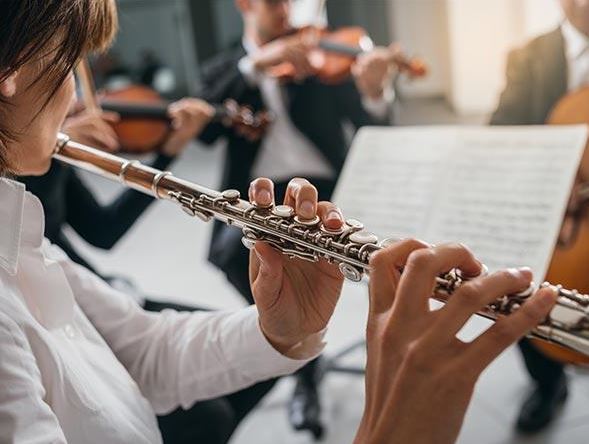
The flute is a transverse (side-blown) aerophone that produces melodic, airy tones when air flows over its embouchure hole. Typically crafted from metal, wood, or bamboo, it’s slender and elegant. But don’t be fooled by appearances—the flute instrument demands precise breath control and finger technique to create pure, resonant notes.
It’s been beloved in classical settings for centuries and even adapted to modern genres for its clear, expressive sound.

From Prehistoric Echoes to Modern Melody: A Brief History
The flute instrument holds the title of one of humanity’s oldest musical inventions. Archaeologists discovered carved bone flutes from around 40,000 years ago in the Swabian Alps, Germany, showing early humans’ musical sophistication. Another candidate—the Divje Babe “Neanderthal flute” from Slovenia—dates to approximately 55,000 years ago, although experts debate its origins Divje Babe flute.
Further evidence comes from Jiahu, China, where multi-note bone flutes dated between 7000-9000 B.C. demonstrate early tuning and craftsmanship in musical instrument history.
In China, bamboo flutes appear in Zhou Dynasty records (c. 1046–256 B.C.), and European transverse flutes emerged via Byzantine trade during the Middle Ages flute.
The modern adaptation began in the 19th century when Theobald Boehm developed the Boehm system—innovative metal keys and pads that unlocked new levels of technical capability for flute players.
Types of Flute Instruments You Should Know
Not all flutes are created equal. Here’s a breakdown of the most common types:
- Concert Flute (Western C Flute) – The classic flute seen in orchestras. It typically comprises three parts: headjoint, body, and footjoint. Most designs use silver or nickel and span around three octaves.
- Piccolo – A compact version that sounds one octave higher than the concert flute. Despite its size, it can pierce through an ensemble with bright, intense tones.
- Alto & Bass Flute – These produce lower, richer tones. The alto flute is slightly larger than the concert, while the bass is even bigger. Their mellow sound adds atmospheric depth in ensembles.
- Other Rare Types – For instance, the contrabass and double contrabass flutes produce deep, haunting bass notes, often used in flute choirs or special compositions.
Global Variants: Beyond Western Flutes
The world has many flute traditions:
- Ney – A Middle Eastern end-blown flute used across Persian, Turkish, Arab, and Egyptian music. It dates back over 4,500 years ney.
- Bansuri – A bamboo side-blown flute from the Indian subcontinent. Rooted in legend and carved from temple imagery, it’s closely linked to Lord Krishna in Hindu art. Bansuris produce microtonal ornamentations beloved in Indian classical music bansuri.
- Irish Flute – A wooden, conical-bore flute used in Celtic traditions. Its tone is more breathy than silver flutes, and players use distinctive ornaments like cuts, strikes, and rolls Irish flute.

How to Play the Flute Instrument
Playing flute involves mastering breath control and finger precision. Here’s a brief guide:
- Embouchure: Players blow across the embouchure hole at the right angle and strength. Too soft, and the tone falters; too harsh, and it squeaks.
- Breath Support: A firm, steady airstream keeps tone clear and sustained.
- Finger Positioning & Technique: Fingers must align precisely over tone holes. On keyed flutes, proper technique ensures pad seals correctly, preventing air leakage.
- Practice Fundamentals: Start with scales and long tones. Over time, add articulation, dynamics, and ornamentation to bring music to life.
You Might Also Like: Electrifying History & Anatomy of the Electric Guitar
Wrapping Up
From prehistoric bone instruments to modern orchestras, the flute instrument has journeyed through time, cultures, and musical styles. Whether it’s the clear, bright tones of a concert flute, the mystical resonance of a bansuri, or the historic echo of a ney, each type brings unique beauty and expression. Who knows—maybe you, too, will fall in love with its airy magic.


